
Illinois Resident Records for One Name
Illinois has no statewide resident roll. County assessors, circuit clerks, election authorities, IDPH, and licensing agencies keep separate records. Match the source to the question and log the custodian and date. An assessment names an owner, not every occupant; a docket shows case events, while the clerk's file is official.
| Record | What It Can Confirm | Custodian or Search Point | Access |
|---|---|---|---|
| Assessment and deed | Recorded owner, parcel, transfer role | County assessor and recorder | Local online, counter, or copy route |
| Voter record | Registration status and election district context | Election authority; State Board of Elections | Lookup or limited inspection |
| Court docket | Case number, party role, filings, status | County circuit clerk and court portal | Online access varies; clerk file is official |
| Vital record | Birth, death, marriage, civil-union, or divorce event | IDPH, county clerk, or circuit clerk | Index, verification, and copy rules differ |
| Probate file | Estate, fiduciary, and heir relationships | Circuit clerk; IRAD for transferred records | Public unless sealed; older holdings vary |
| License or entity file | Credential status or public business role | IDFPR or Secretary of State | Public search; not a home-address source |
For an estate, search probate by decedent, then request the petition, will, inventory, and heir or fiduciary notices; IRAD may hold older files. Use the matching vital index or application for events. Assessments are local across Illinois's 102 counties, so routes and office names vary.
Other Illinois Resident Records: Court Channels
Illinois eFileIL handles filings, not public name searches. Some case types are excluded; public terminals remain a separate route, and the circuit clerk keeps the case file.
re:SearchIL gives secure access to participating e-filed cases; role and case type limit what a login can show. PACER is the separate federal route, searchable by party or case number, with current per-page charges posted there.
Municipal hearing searches may need a citation or respondent name, case or hearing number, address, violation, or disposition. Portals can be partial; ask the city hearing clerk or circuit clerk for the full file. Keep these administrative hearings distinct from circuit-court cases.
Municipal hearing records may use a citation or respondent, case or hearing number, address, violation, and disposition. Portals can be partial; ask the city hearing clerk or circuit clerk for the full file.
Illinois Resident Court Results Need Context
Illinois has 25 judicial circuits with county circuit clerks, and portals vary. Cook County Online Case Information shows a docket, not the official record; recent entries may lag. Use a courthouse terminal for missing or new entries. The clerk's file controls.
Cook accepts a party name or case number; the known number is more precise. Compare division, party role, filings, events, and status when names match.
Insider tip: if the online docket is incomplete or too recent, check a courthouse public terminal, then confirm the document with the clerk. The screen is a research aid; the clerk-held file remains the authoritative copy.
| Cook search item | Type or result | Use and limit |
|---|---|---|
| Party/name search | Text search | Name route in the linked case-information system; not a statewide search |
| Case number | Text, alternate search | More precise when known |
| Division | Result or filter | Examples include Law and Municipal |
| Party type | Result field | Shows a party's role in the case |
| Docket events | Result summary | Filing date, event, hearing, and status may appear; recent data can lag |
| Public terminal | In-person access | Use the courthouse terminal for recent or missing entries |
- Party name and party type
- Division, case number, and its year/division/number format
- Filing date and document or event description
- Action or hearing date, plus disposition or status
A docket is a lead, not the file. Ask the circuit clerk about standard or certified copies; fees and delivery vary. The Cook County court information page supplies this example and screenshot.
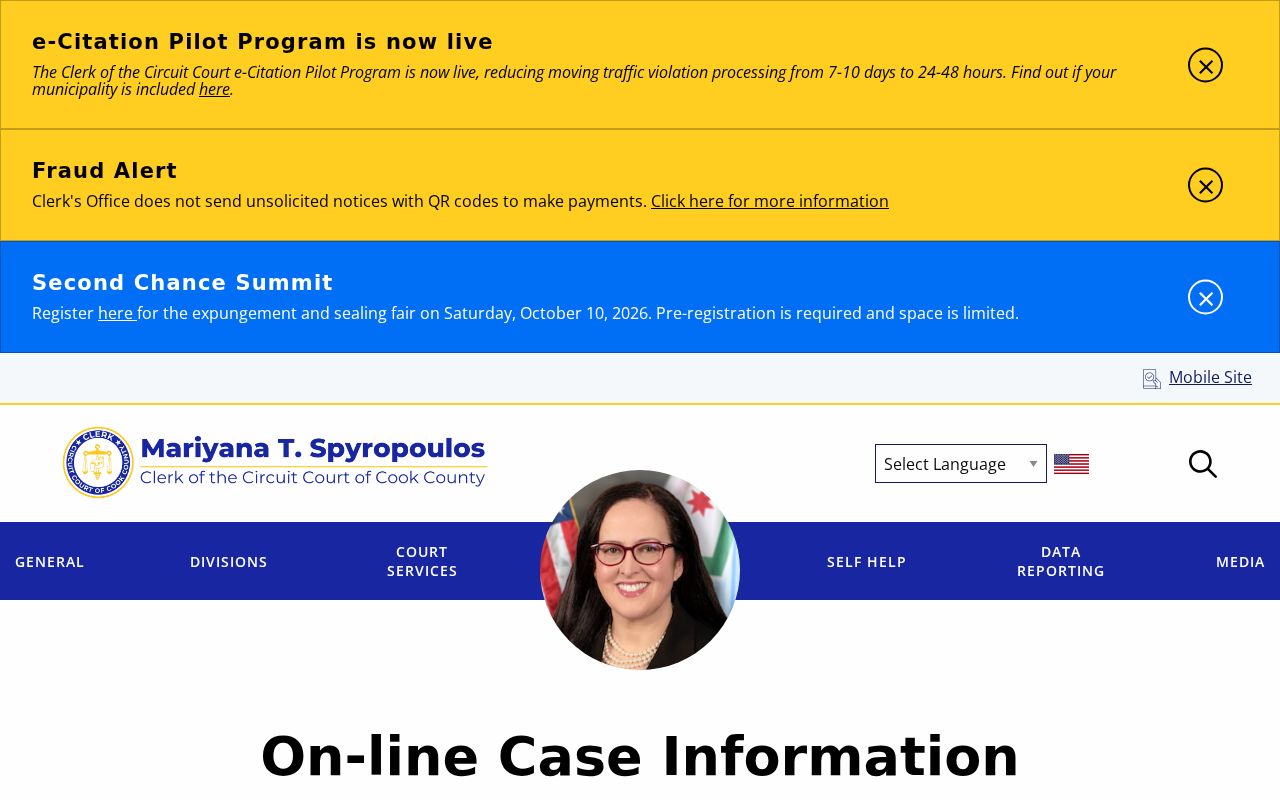
This is Cook County's entry point; elsewhere, use the clerk for the county where the case was filed.
Illinois Resident Name Matches Need Context
A name alone does not settle identity. Illinois records may use a middle initial, full middle name, former surname, or different spacing. Keep county and role in view: plaintiff, executor, grantee, and license holder are distinct links, not proof of one person.
Test a match with another custodian: compare case county and dates with a known event, or owner and parcel with a deed's legal description. An index may not reveal a family record's contents. Never join entries on name alone.
Vital Index Rules for Illinois Resident Records
Vital records split by event and date. For births before 1916, IDPH routes applicants to the county clerk. Birth copies are confidential; genealogy copies become available after 75 years. The application requests recorded name, date and place, parent names, requester relationship and contact details, purpose, ID, signature, and payment; eligibility controls issuance.
Death-copy requests require photo ID and personal or property-right interest, or a genealogy request for an uncertified copy. Mail takes about 12 weeks. IDPH marriage verification covers data from 1962 and civil-union verification from 2012; county clerks issue certified copies. Verification is not a certificate or divorce decree.
For adoption or birth-parent contact, use confidential IARMIE, not public name search. Eligible participants apply with ID; the usual fee is $15, waived with a medical questionnaire. Forms and eligibility depend on the applicant's relationship to the adoption.
Illinois Voter Lookup Has a Public Boundary
The State Board of Elections voter lookup lets a person check their own registration and election details. A voter card may be inspected under the Election Code, with special timing in the 27 days before an election. This does not make the statewide electronic list a general download. At other times, SBE permits on-screen viewing at its Springfield office, without printing, copying, transmitting, or changing the file.
The myth that public inspection means an unrestricted statewide voter download confuses two separate access routes. SBE lists geographic products and prices: $500 for statewide data and $100 for Cook County or Chicago files. Statute limits disclosure and bars commercial solicitation or business use; protected Address Confidentiality Program voters must be omitted from public lists.
Use the State Board of Elections data page for its current form, choices, and use rules.
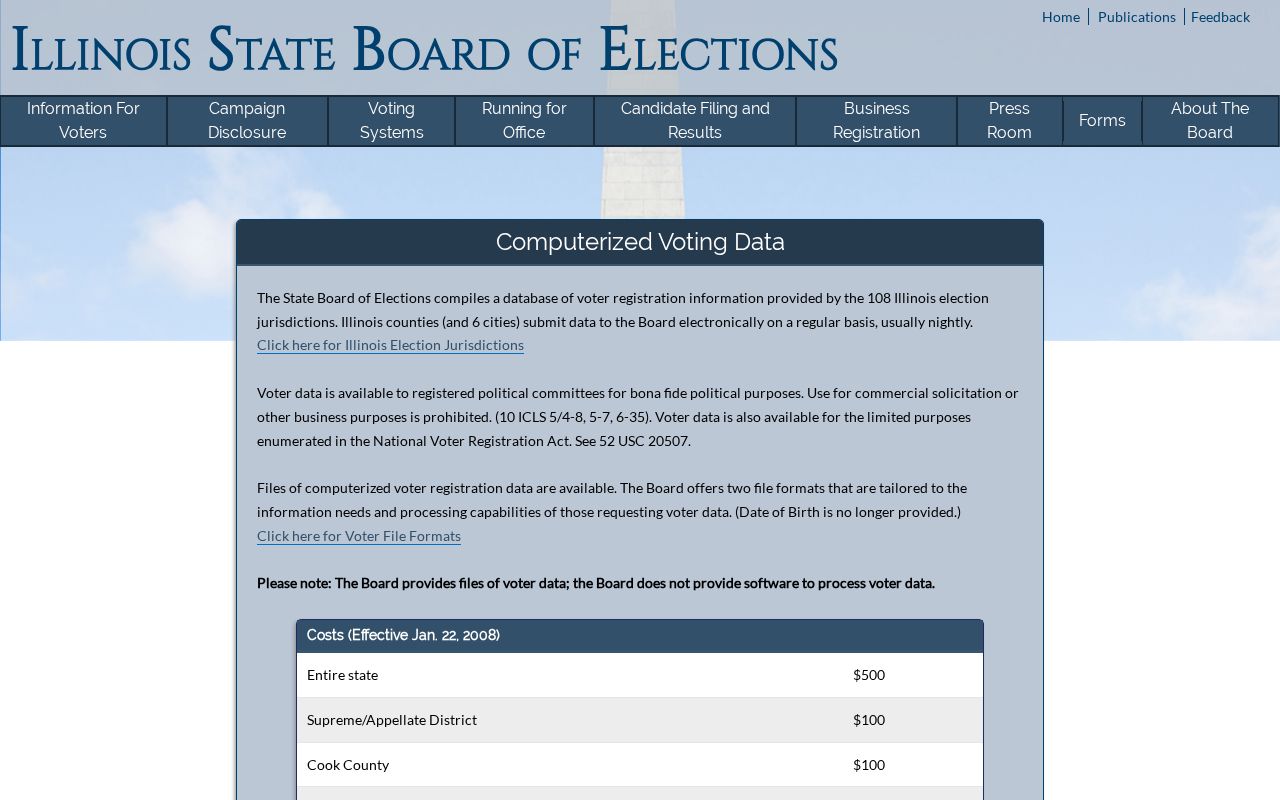
The page distinguishes voter registration cards from restricted electronic voter data, so a name search should stay within the access route the law allows.
Illinois Registry Records and Resident Limits
Illinois has defined name-search tools, not a master resident list. The Illinois State Police Sex Offender Registry searches name, birth date, city, ZIP Code, county, status, offender type, or map. Its fields concern registry status, not proof of current residence; its legal-use notice applies.
The Department of Corrections Individual in Custody Search may show IDOC number, institution or status, vital statistics, admission or release dates, and sentence data. County sheriffs hold local jail rosters; no statewide county-jail list exists. A name-only “no record” criminal-history response is inconclusive; State Police identifies fingerprints as the positive identity method.
Use the Illinois State Police registry search only for its stated public purpose.
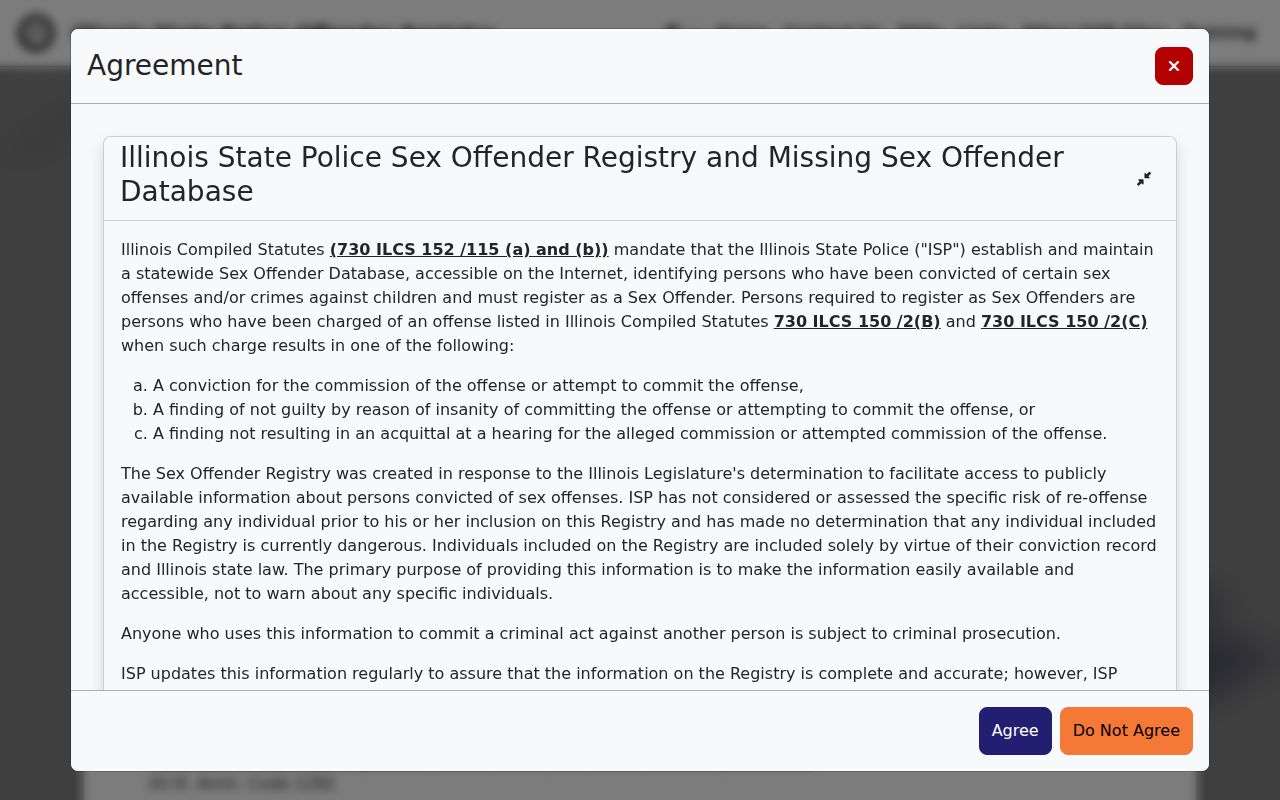
The field set is limited to the registry's statutory subject; it should not be read as a broad resident directory.
Find Illinois License Records for One Person
For a credential or company role, use its issuing agency. The Secretary of State Corporation and LLC database searches business name, registered agent, officers or managers, file number, and partial keywords. A File Detail Report may show legal name, formation date, jurisdiction, registered office and agent, status, and managers. Its address is the entity's, not proof of a home.
IDFPR's individual license lookup returns number and type, status, city/state/ZIP, effective and expiration dates, and disciplinary indicator. Single-license data updates daily, bulk data weekly; a new license may take 24 hours to appear. It omits home address, personal email, and phone. If a name fails, try fewer fields or spelling variants.
Search the Illinois Secretary of State entity database or IDFPR lookup. A filing or credential may distinguish similar names but needs a second source.
Verify an Illinois Resident Across Offices
For one-person lookup, tie each step to a source and date. No public index is guaranteed to identify a current address.
- Write the question and known county, event, or case. For a known property link, search assessor by address or PIN; keep owner's name distinct from situs address.
- Search the circuit clerk by case number, then lawful name variants. Log county, division, party role, case number, and date.
- Compare with a second custodian such as a vital index, probate file, deed, or license record. A shared name alone cannot join entries.
- Ask the custodian about copies; confirm eligibility, ID, fee, and whether the product is an index, verification, standard, or certified copy.
- Docket
- A dated case list of filings or events, not the full court file.
- Index vs. image
- An index points by name, date, or number; an image scans the underlying document when publicly available.
- Certified copy
- A copy formally certified by its custodian; eligibility, fees, and delivery vary.
When a directory or yearbook is the better clue, Illinois library collections add historical context; the Illinois city directory collections are a separate source from current official records.
When Illinois Online Records Stop
A missing online result is a reason to ask what survives and how to request it. Contact the circuit clerk for a docket or file and local clerk or recorder for older county records; call or mail if required. A written Illinois FOIA request seeks identifiable, non-exempt public records, not confidential vital, juvenile, adoption, sealed, or otherwise closed records.
The Illinois State Archives and IRAD network accept focused inquiries online, by mail, fax, email, phone, or in person. Regional depositories vary but may hold county probate, court, voter, or land records. Initial mail inquiries should focus on no more than two names or items. Libraries may hold obituary indexes and print or microfilm sources.
IDPH's September 2026 notice says its Springfield vital-records office moved to 110 W. Lawrence Avenue effective September 14, and its mail processing estimate remains about 12 weeks. Use the current IDPH death-records page for the latest office and form instructions before sending a request.
Privacy Limits for an Illinois Resident Lookup
Illinois FOIA provides non-exempt public records, while sections 2 and 7 protect private information and require redaction when disclosure invades privacy. Court files may exclude juvenile, adoption, mental-health, sealed, expunged, or protected family matters. Vital-record eligibility still applies; an index does not open a confidential certificate.
The Address Confidentiality Program gives eligible survivors a substitute address for new public records, which state and local agencies must accept. It cannot protect property records or erase an address already recorded. Voter records have separate ACP protections. Driver data is restricted by federal privacy law; utility and delivery records are not public resident sources.
Ask the custodian how to correct an error: assessors handle assessments, election authorities voter records, and courts their own files. There is no single correction form. The Illinois AG's Address Confidentiality Program explains protections and limits.
Lawful personal use. Use Illinois records for a lawful personal question, such as family research or checking an official filing. A public record does not permit surveillance, threats, unwanted contact, or sharing a protected address; stalking is prohibited under 720 ILCS 5/12-7.3.