
Illinois City Directory Collections
Illinois directory holdings are local, not one state database. Catalogs may list selected years rather than every book printed. Treat approximate intervals and non-inclusive runs as shelf guides, then confirm the exact volume with the holding library before visiting or citing it.
| Collection | Years or Run | Where Held | Access Route |
|---|---|---|---|
| Chicago directories | 1839; 1844; 1849-50; 1851; 1853-57; 1859-68; 1870-1917; 1923; 1928-29 | Newberry Library, second-floor reference desk | Use the collection inventory to request a year and name or street section |
| Chicago telephone directory | 1912-13 | Library of Congress digital item and microform collection | Online scan has 440 images, including white and yellow pages |
| Peoria directories | 1844-1916, non-inclusive | Peoria Public Library Local History & Genealogy; FamilySearch Digital Library | Library page links digitized holdings; some databases are available in the room |
| Plainfield-Joliet and Lockport directories | Plainfield-Joliet: 1900, 1966-present; Lockport: 1973-93 | Plainfield Area Public Library Local History Collection | Ask the local collection about the volume and format |
| Springfield directories | 1876, 1892-93, 1929, 1935, 1938; 1960-88 about every two years | Lincoln Library/Sangamon Valley collections, UIUC and area libraries | Check a local catalog for the exact year and print holding |
| Bloomington directories | 1907-60 about every ten years; another library lists 1987 | University of Illinois and public libraries | Search separate catalogs because the runs are intermittent |
| Champaign-Urbana directories | Champaign: 1993; Champaign-Urbana: 1965 | UIUC and local history collections | Verify exact city and volume in the local catalog |
| Joliet and Kankakee directories | Joliet: 1880-1950s about every two years; Kankakee: 1929-76 about every ten years | UIUC and area libraries | Use the catalog interval to identify gaps before a visit |
| Reverse and criss-cross directories | Location-specific; no statewide run established | LOC print/reference holdings, local libraries and historical societies | Ask staff for street-order or address-to-name books |
| Sanborn fire-insurance maps | Varies by Illinois city; LOC holdings commonly extend from the late 1800s into the 1930s or 1950s | LOC, local libraries and university map libraries | Use print or digital map collections for building context |
Cataloged spans do not promise that every year survives. Newberry's Chicago microfilm list has gaps; Springfield, Bloomington, and Kankakee holdings are intermittent; Peoria catalogs give overlapping runs. For a missing year, check another library, newspaper, archive, or nearby town directory.
Chicago's Newberry Film Run
For Chicago, the Newberry Library's second-floor reference desk is the starting point for its annual book collection. The inventory groups the city directory microfilm by date and lists publisher changes across the run. A researcher can use the Newberry Chicago history guide and directory inventory to narrow a request before asking staff for a reel or a particular year.
The surviving years are scattered: the list begins with 1839, then names 1844, 1849-50, 1851, 1853-57, 1859-68, 1870-1917, 1923, and 1928-29. Those gaps matter. A household missing from a listed year may be absent from the book, indexed under another name, or simply outside the surviving run. Compare a nearby directory year and a different source before treating silence as evidence that a family left Chicago.
The Newberry guide is useful for planning access, while each volume remains the source for its own abbreviations and arrangement. Write down the year, publisher, reel, and page or section as you work so another reader can retrace the result.
- 1839 is the earliest Chicago directory year listed in the Newberry inventory.
- 1912-13 is the separate Library of Congress Chicago telephone-directory scan.
- 1928-29 are the latest Newberry Chicago directory years in the listed runs.
See the Newberry's Chicago directory inventory before requesting an item; its year list identifies the surviving microfilm runs.
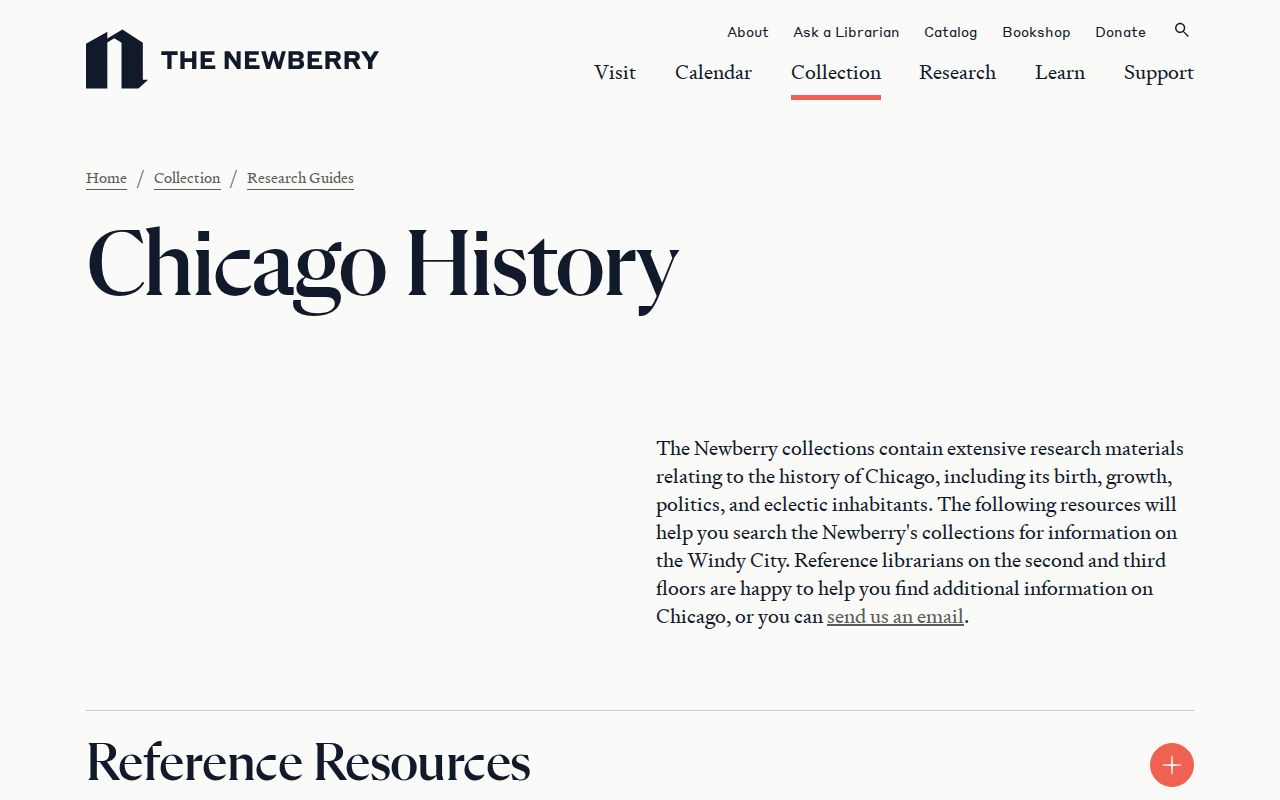
The inventory narrows a Chicago request to the dates and sections that the library actually holds.
Illinois Directories in Peoria
Peoria Public Library's Local History & Genealogy Room keeps directory and phone-book material alongside obituary indexes, newspapers, cemetery indexes, yearbooks, funeral-home records, and Sanborn maps. The room is on Lower Level 1 of the Main Library and is listed as open 9 a.m. to 6 p.m. Monday through Saturday. Staff can be reached at 309-497-2000 or Questions@ppl.peoria.lib.il.us. Its page for local history and genealogy collections links digitized directory material and describes in-library research access.
The library reports Peoria directories from 1844-1916, non-inclusive, with content that changes by year. A University of Illinois guide separately lists Peoria directories from 1872-1977 at roughly ten-year intervals. Those descriptions overlap but do not mean the library has every year between the endpoints. Confirm the exact volume with the catalog or staff, then ask whether it is a scan, microfilm, or room copy.
The room also reports 773 local-history books digitized through FamilySearch. Research access to Ancestry Library Edition, HeritageQuest, and HeritageHub is available in the building, and the holdings include Peoria newspapers on microfilm from 1837-2018, yearbooks from 1901-2020, and funeral records with incomplete date coverage. This is a useful model for how one local history desk can connect a name found in a directory to a second record series.
Peoria Public Library's Local History & Genealogy page lists the room's book and family-history resources.

Peoria's room shows how to move from a directory entry to newspapers, cemetery records, and related local collections.
The Illinois Directory Shelf Is Local
A statewide search does not produce one complete annual Illinois directory. Newberry's Chicago inventory, a university guide, a town library's local history shelves, the Library of Congress, and FamilySearch may each describe a different slice. Some holdings cover neighboring towns in a regional volume; others list only one city and selected years. Search by city, county, publisher, year, and directory type, then follow the catalog record to the institution that holds the book.
For a smaller community, ask the local library's genealogy or local-history staff rather than relying only on the general catalog. A printed directory may be filed with phone books, county histories, yearbooks, or newspaper collections. If the nearest library lacks the year, the Newberry inventory, LOC guides, university catalogs, historical societies, and regional archives can point to a different shelf. The key is to verify that a catalog entry represents the item and year needed, not just a broad collection heading.
Reading an Illinois City Directory Entry
Read an entry with the book's own front matter in view. Across the inspected Chicago and Peoria examples, an alphabetical listing may give a surname, given name or initials, spouse notation, occupation, address, and sometimes a telephone or flat detail. The exact fields vary by year and publisher. A separate street section can connect a house number to a name, but it may not list every person in a household.
| Entry detail | What to record |
|---|---|
| Name | Headword, given name, or initials; check spelling variants and household references |
| Family note | A spouse may appear in parentheses; some runs mark a widow with “wid.” |
| Occupation | A short occupation label may be listed; meanings and abbreviations change by volume |
| Address | House number and street, sometimes a flat or telephone detail |
| Owner mark | Some directories flag a homeowner; an unmarked entry does not prove ownership |
Front matter can explain spelling, symbols, ward or street notation, and the way names were sorted. Check it before expanding an abbreviation. Some names appear under a spouse, an initial, or a variant spelling; do not assume an absent exact match means a person was not listed.
- Criss-cross section
- A reverse or street-order section that helps move from an address to a listed name.
- Householder index
- An alphabetical name list that points to the page where a resident entry appears.
- Abbreviation key
- The volume's guide to shortened terms and marks, usually found in its opening pages.
Record the page, exact wording, and year together. A directory is a published snapshot, not a full household census or deed record.
Illinois Directories Meet Census Years
Directories can fill the long span between federal census schedules because they were issued more often in some cities. Start with a known census, obituary, marriage, deed, yearbook, or permit date, then compare a directory near it. Census schedules from 1850 through 1940 give household relationships and ages; the 1950 schedule has been released. The 1890 federal census was destroyed in a 1921 fire, so it cannot serve as the missing midpoint for an Illinois family.
Illinois Archives holds 1930 schedules on microfilm but says it has no usable name index for ordinary name searches. A local directory or a known address may help narrow a browse, but the schedule still needs to be checked by its own place and enumeration district. Treat each directory year as a dated lead, then confirm a change of address, spouse, or household against other records.
Chicago's 1909 Address Change
Chicago's 1909 street-number conversion can break a simple search for an older household. North- and west-side addresses changed, and the Lakeside Directory published an old-to-new conversion list. A directory entry or permit card may therefore show a number that no longer matches the current street address. Before ruling out a building, compare the old and new numbers and check the street name, direction, and nearby lots.
This is a Chicago-specific warning, not a statewide renumbering date. Other Illinois towns also have their own street-name, annexation, and readdressing histories. When the volume shows a puzzling number, consult the city's maps, clerk records, local-history files, or address conversion material rather than guessing at a replacement.
Illinois Directory Companions and Sanborn Maps
Other local collections can make a directory entry easier to place. Sanborn fire-insurance maps show building footprint, materials, use, and lot context, not the names of everyone who lived there. Illinois coverage varies by town. Peoria maps are available online and in print, while the Library of Congress and university map rooms hold maps for other places, often across different decades.
Yearbooks, newspapers, cemetery indexes, obituary files, and funeral-home records can help confirm a family connection or explain a name change. Peoria's Wenzeler funeral records cover 1908-1954; Boland Mortuary volumes run 1922-1978 but are incomplete. A WPA collaboration created an early Peoria newspaper index for 1834-1863. Those records are companions, not substitutes for the directory's own date and address entry.
Tracing Illinois Directories Through Families
For family history, follow a name across years without treating any one listing as proof of a life event. Keep a working note with the place, edition year, exact name, address, spouse notation, and the directory's own abbreviation reading. Then use nearby census years and independent records to test what changed.
- Choose the city and a directory year near a known census, marriage, deed, obituary, school yearbook, or permit.
- Read the alphabetical entry and any street or reverse section; note the full spelling, initials, address, spouse, and marks.
- Check an earlier and later volume, allowing for gaps and changes in the printed arrangement.
- Pair the listing with a census year and note that 1890 is missing and the Archives' 1930 microfilm has no usable name index.
- Confirm the trail with deed, probate, newspaper, cemetery, school, or tax evidence held by the relevant custodian.
A name that disappears may reflect a move, a gap in the collection, a changed spelling, a death, or a shift in the directory's coverage. The book alone cannot sort those possibilities. If the goal changes from an old family entry to a current person, the modern Illinois resident lookup uses different sources and needs its own verification trail.